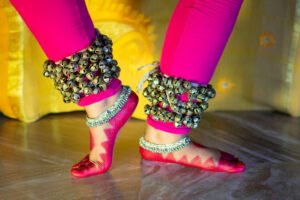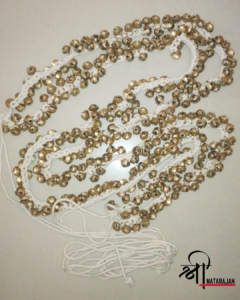
Choosing the right ghungroo is an important decision for every Bharatanatyam dancer. While ghungroos may appear similar at first glance, the number of bells, pad construction, and overall weight can significantly influence comfort, sound clarity, and performance quality. Understanding these factors helps dancers select ghungroos that support both practice and stage performances.
Why Ghungroos Matter in Bharatanatyam
In Bharatanatyam, footwork plays a central role in expressing rhythm and structure within the dance. Ghungroos act as a rhythmic instrument that amplifies the dancer’s movements, allowing each step to align clearly with the tala (rhythmic cycle). The sound produced by ghungroos helps dancers maintain precision and also enables teachers to identify subtle timing errors during training.
If you are new to classical dance, understanding the importance of ghungroos in Indian classical dance can help explain why dancers treat them with respect and care throughout their learning journey.
Understanding Ghungroo Lines and Bell Count
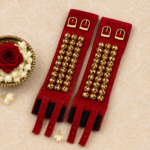
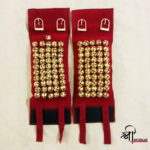
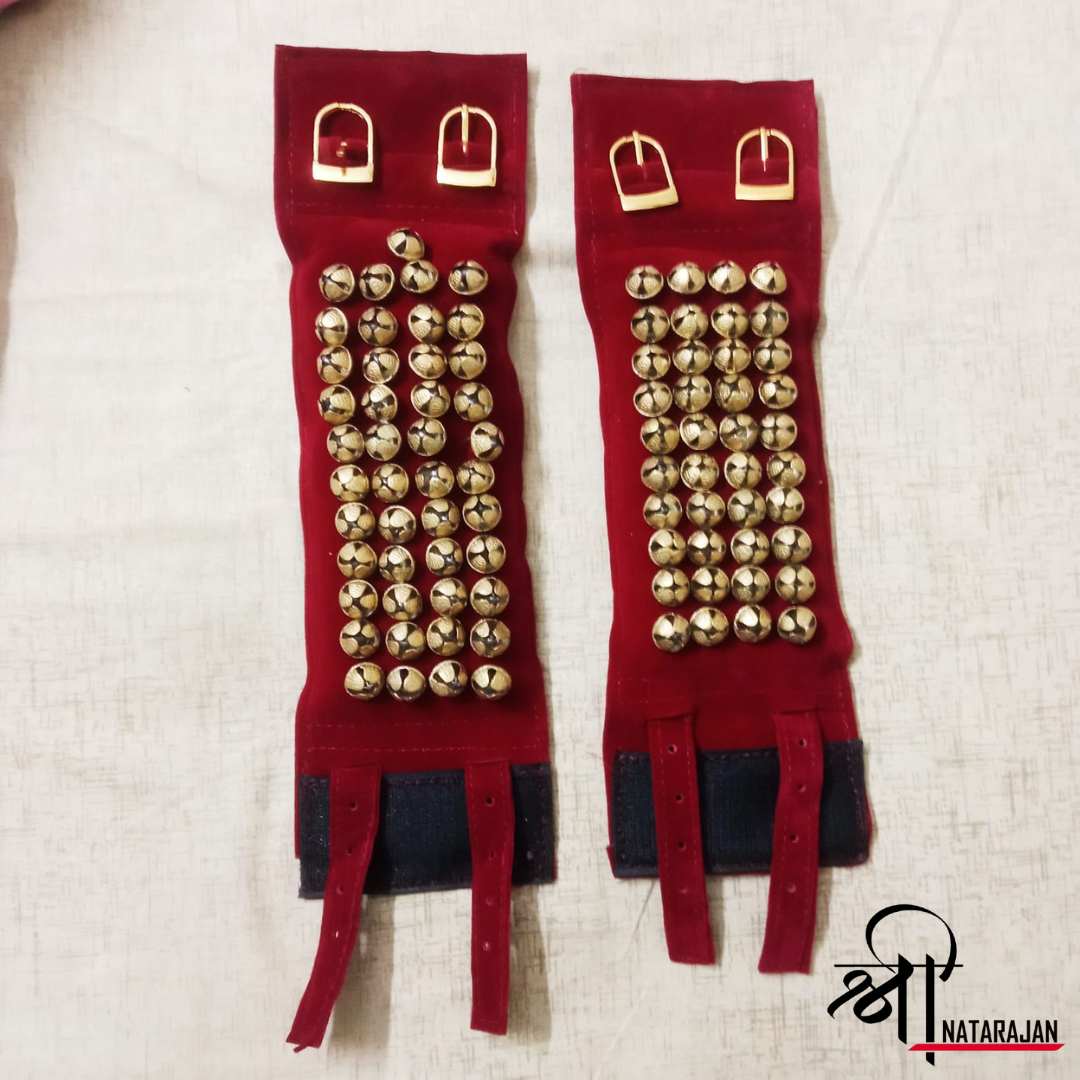
Bharatanatyam ghungroos are often described by the number of “lines,” which refers to rows of bells attached to a velvet or cushioned pad.
Common options include:
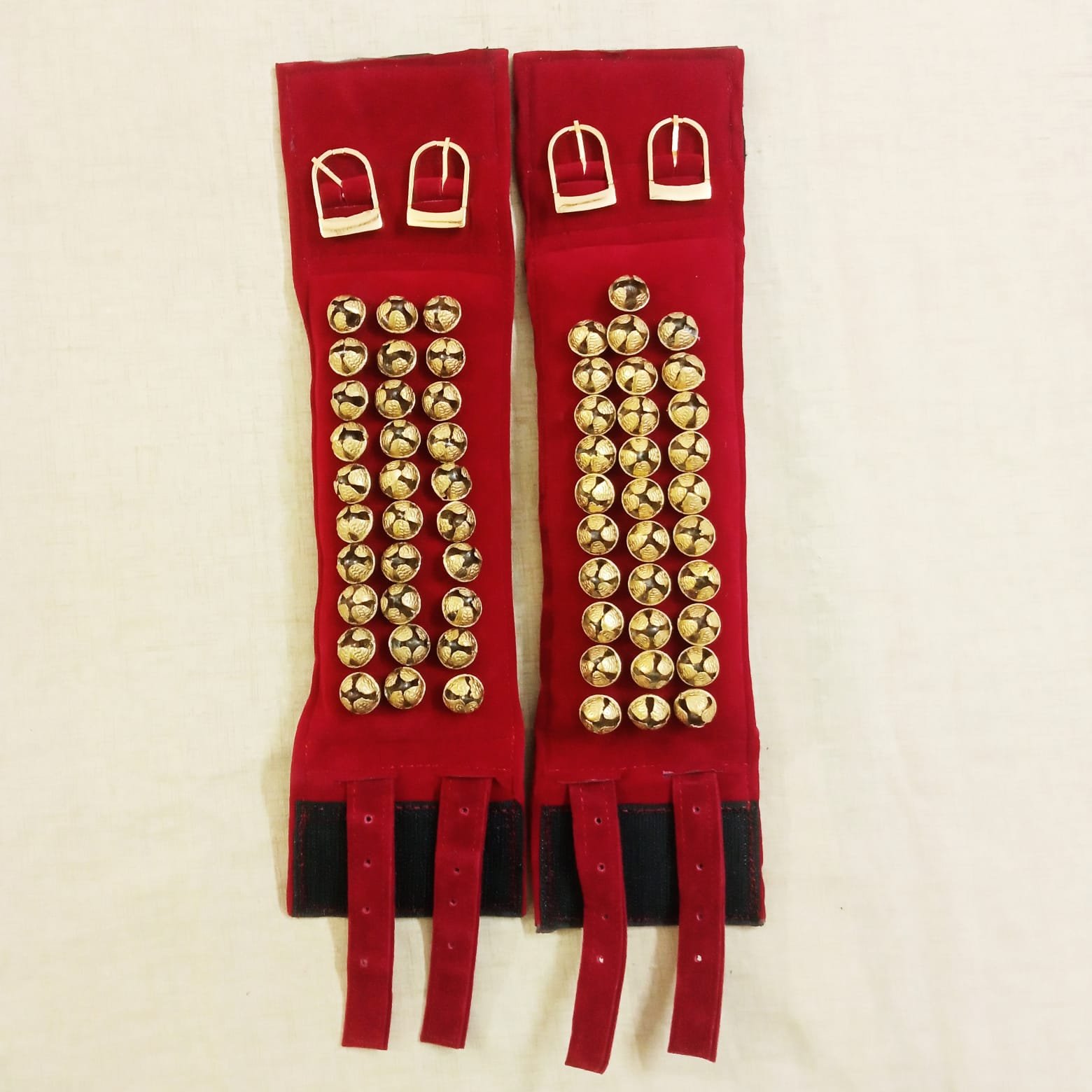
• 3-line ghungroos – Suitable for beginners and young students starting their Bharatanatyam training.
• 4-line ghungroos – A balanced option that offers stronger sound while remaining comfortable for regular practice.
• 5-line ghungroos – Typically preferred by advanced students and performers for richer resonance and stage presence.
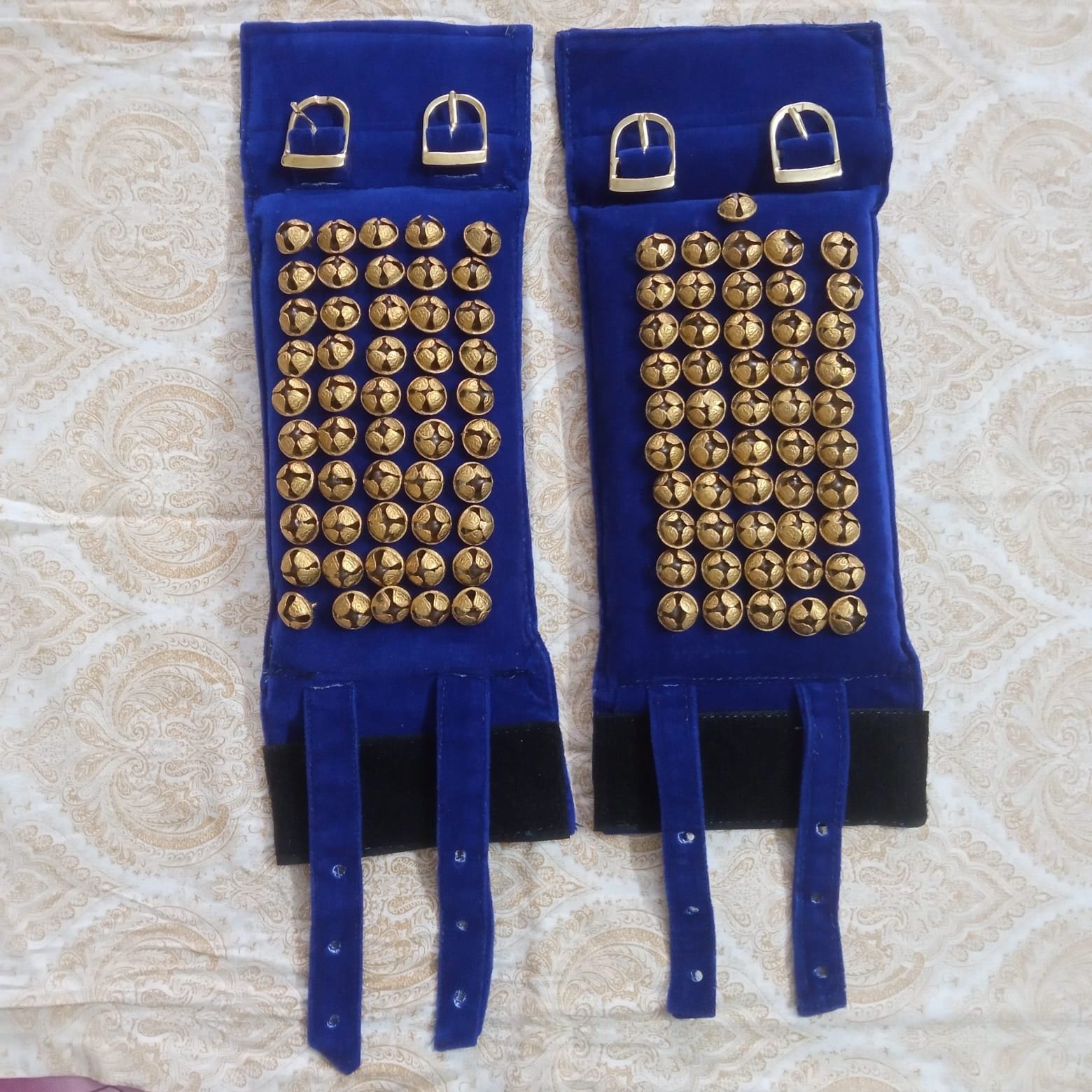
The right choice depends on the dancer’s experience level and physical comfort.
Velvet Pads and Comfort During Practice
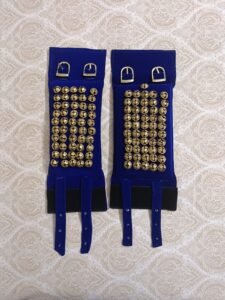
Most Bharatanatyam ghungroos are mounted on soft velvet pads with adjustable straps. This design helps distribute weight evenly around the ankle and reduces strain during long practice sessions.
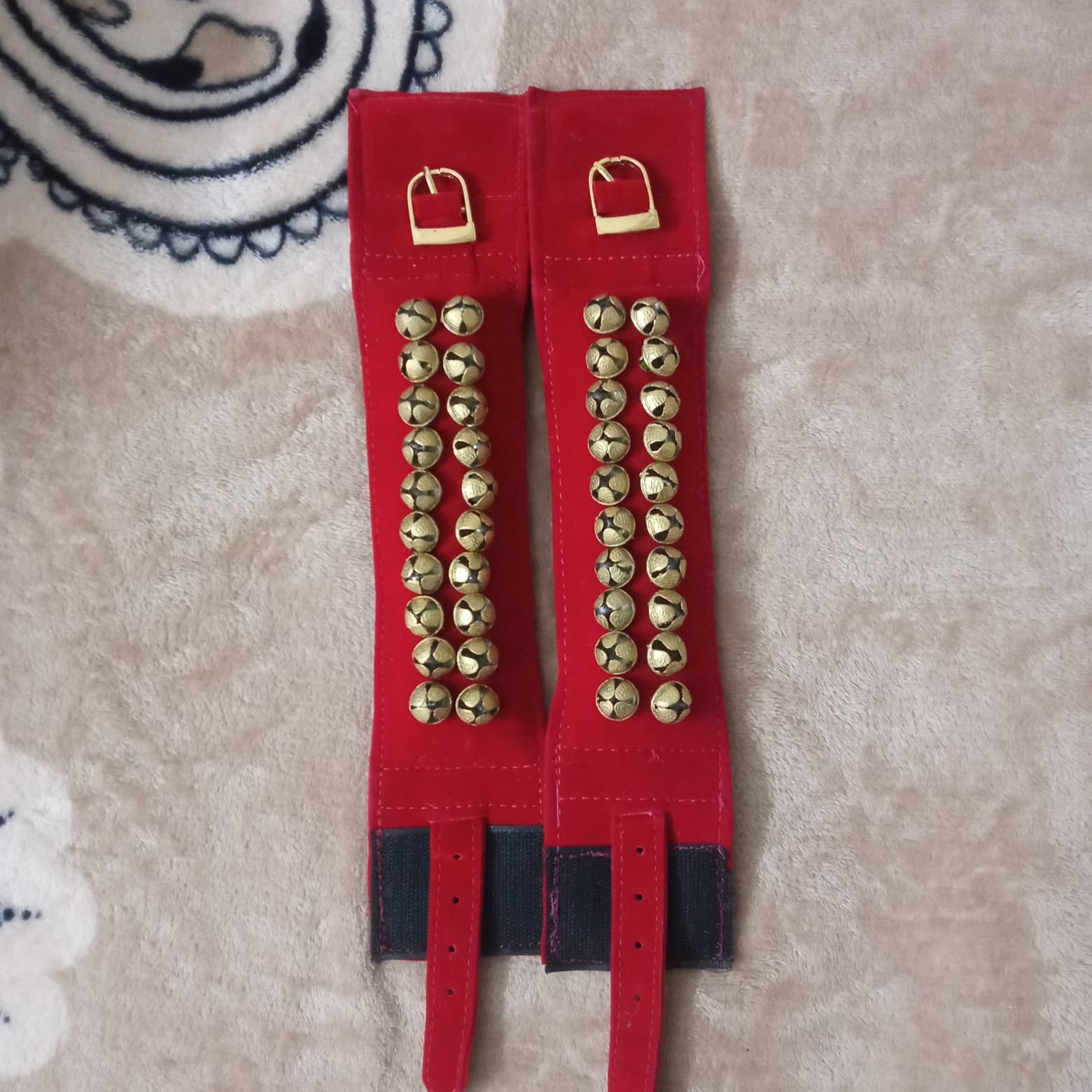
Comfort becomes especially important because Bharatanatyam training often involves extended rehearsals with repeated stamping movements. Well-designed padding allows dancers to focus on technique without unnecessary discomfort.
Practice vs Performance Ghungroos
Some dancers maintain separate ghungroos for daily practice and stage performances. Practice ghungroos help build stamina and rhythmic consistency, while performance ghungroos are chosen for their clarity of sound and visual presentation on stage.
Selecting the right pair ultimately depends on a dancer’s training level, frequency of practice, and performance goals.
Choosing Ghungroos That Support Your Growth
A well-chosen ghungroo pair should provide clear sound, comfortable weight, and durable construction. As dancers progress in their Bharatanatyam journey, their requirements may change, making it important to select ghungroos that match both their current needs and future development.
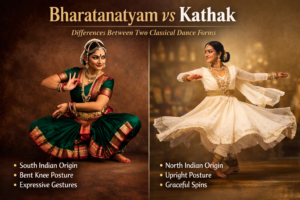
For dancers exploring other classical forms such as Kathak, understanding how to choose the right ghungroo for Kathak dance can also highlight how ghungroo design varies depending on the dance style.