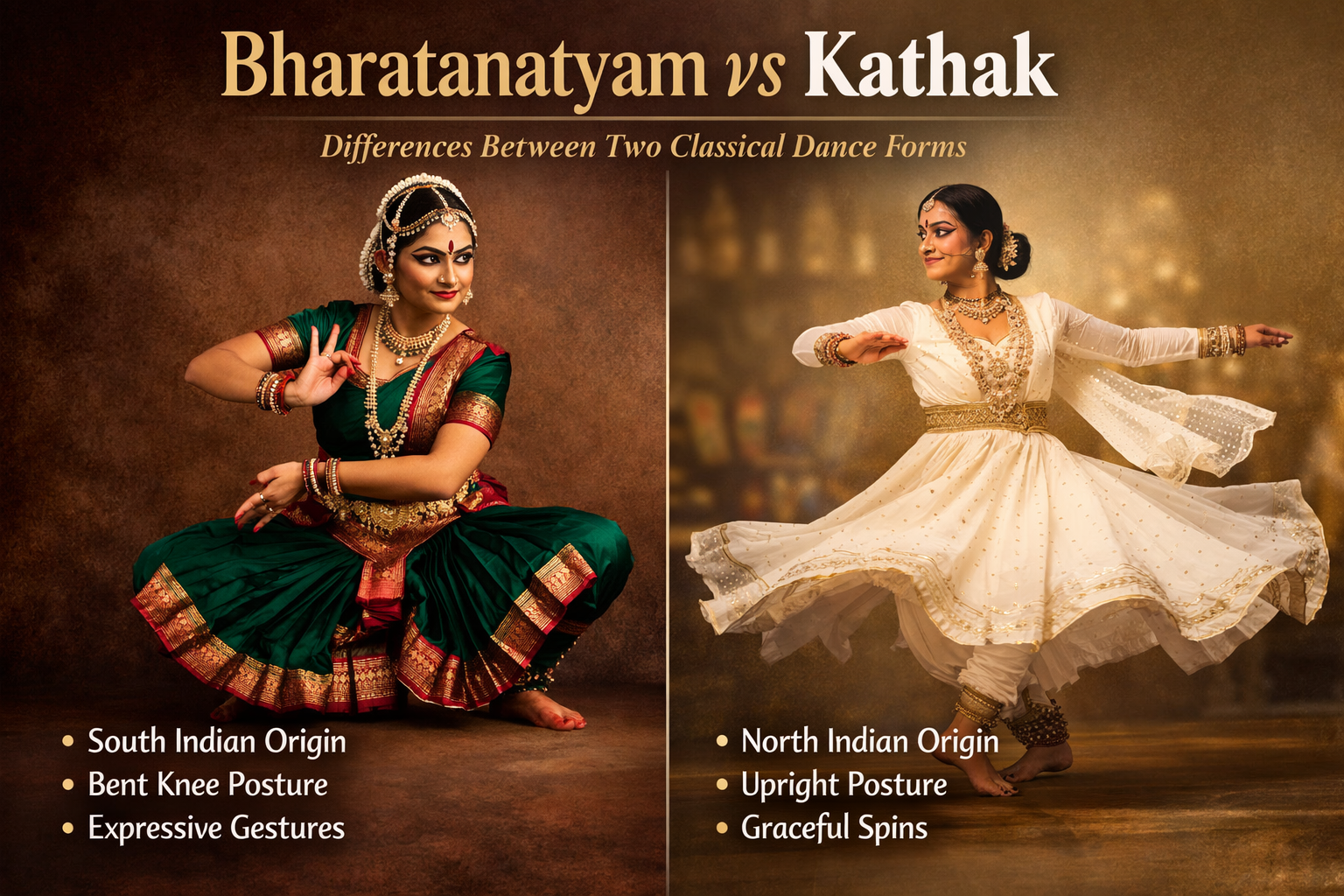
Indian classical dance is a vast and deeply rooted tradition, shaped by geography, history, and culture. Among its many forms, Bharatanatyam and Kathak stand out as two of the most popular and widely practiced styles today. While both are classical dances governed by rhythm and discipline, they differ significantly in movement vocabulary, storytelling approach, musical framework, and overall presentation.
Understanding the difference between Bharatanatyam and Kathak helps students, parents, and enthusiasts choose the right path and appreciate the individuality of each form.
Cultural Roots and Evolution
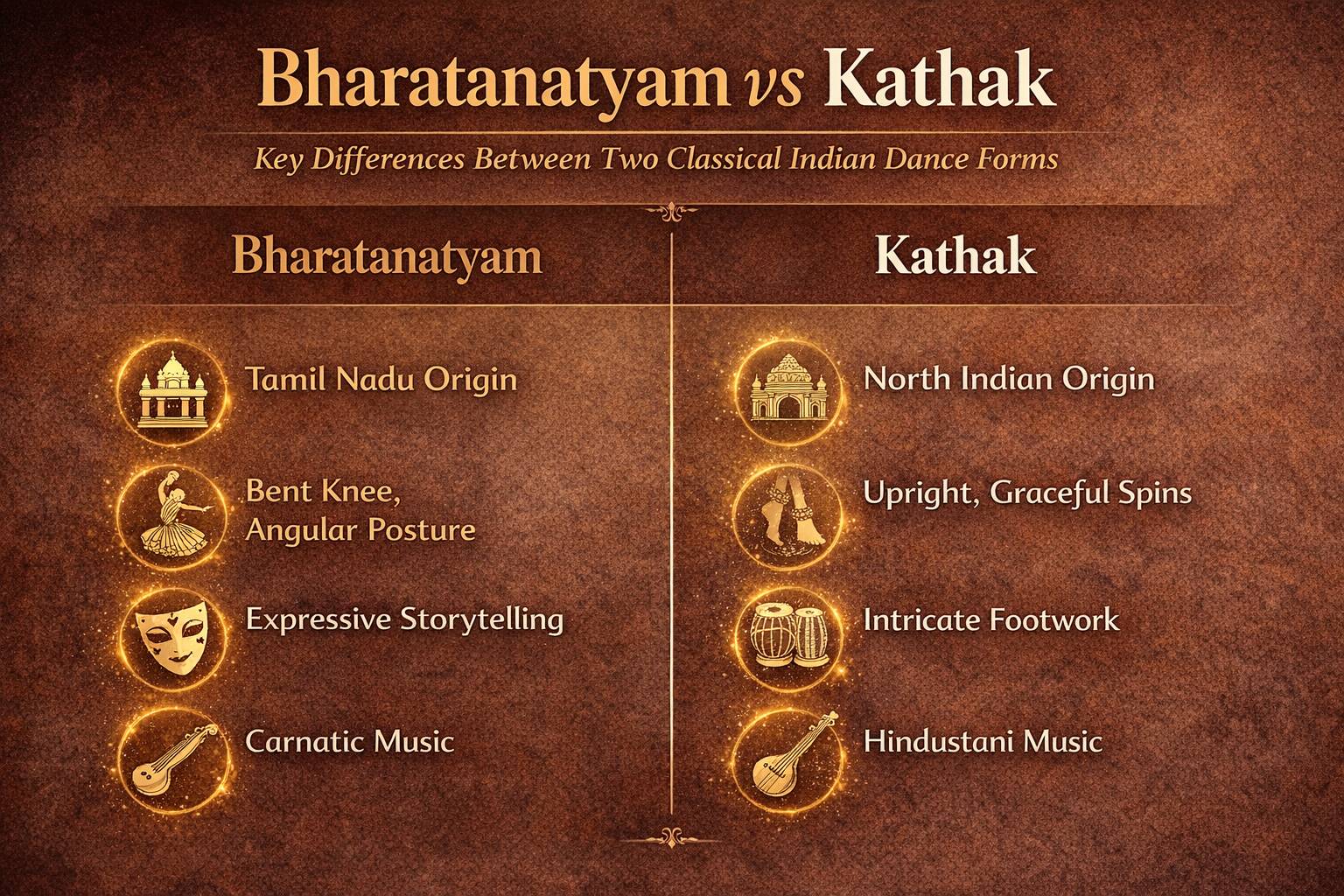
Bharatanatyam traces its origins to South India, particularly Tamil Nadu. Historically performed in temples, it evolved as a devotional art form closely linked to spiritual expression and storytelling based on Hindu mythology. The dance emphasizes devotion (bhakti) and visual storytelling through well-defined movements.
Kathak originated in North India and developed from oral storytelling traditions. Over time, it absorbed influences from royal courts, especially during the Mughal period. This historical journey shaped Kathak into a form that blends narrative expression with rhythmic sophistication and elegance.
Movement Language and Body Alignment
One of the most noticeable differences between Bharatanatyam and Kathak lies in body posture and movement style.
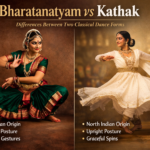
Bharatanatyam is grounded and structured. Dancers maintain a half-seated posture with bent knees, creating strong geometric lines through arms, legs, and torso. Movements are sharp, precise, and symmetrical, reflecting sculptural poses seen in temple carvings.
Kathak, in contrast, emphasizes vertical alignment. The posture is upright, and movements are fluid and continuous. Graceful turns and spins are central to the form, giving Kathak a sense of flow and lightness that contrasts with the grounded strength of Bharatanatyam.
Rhythm and Footwork
Both dance forms rely heavily on rhythm, but they interpret it differently.
In Bharatanatyam, footwork is powerful and measured. Each step is placed deliberately, often supporting expressive storytelling. Rhythm complements narrative and emotion, creating a balance between movement and expression.
Kathak places rhythm at the forefront. Complex footwork patterns, fast tempo changes, and intricate rhythmic compositions are hallmarks of the form. Dancers often engage in rhythmic dialogue with percussion instruments, making footwork a central performance element rather than a supporting one.
Costumes and Visual Aesthetics
Costume design plays a vital role in distinguishing the two styles.
Bharatanatyam costumes are inspired by traditional South Indian attire, with stitched pleats that fan out during movement. Jewellery is temple-style, adding to the devotional and traditional aesthetic of the performance.
Kathak costumes are more fluid and varied. Female dancers commonly wear flowing anarkalis or lehengas that enhance the visual impact of spins, while male dancers wear kurtas and churidars. The costume design supports the elegance and motion characteristic of Kathak.
Music and Expressive Approach
Music forms another key difference.
Bharatanatyam is traditionally performed to Carnatic music and places strong emphasis on abhinaya, or expressive storytelling. Facial expressions and hand gestures convey emotions, characters, and narratives with depth and clarity.
Kathak is performed to Hindustani music and focuses more on rhythm, tempo, and musical interaction. While expression is present, the emphasis often lies on timing, improvisation, and rhythmic precision.
Role of Ghungroos in Both Dance Forms
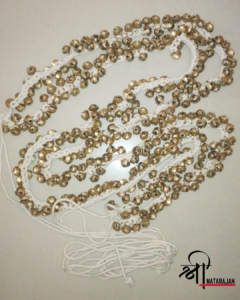
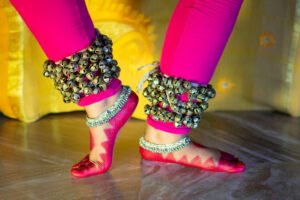
Ghungroos are essential in both Bharatanatyam and Kathak, but their usage reflects the nature of each style.
Bharatanatyam dancers generally begin with lighter ghungroo sets and gradually increase intensity as they progress. The sound supports structure and rhythm without overpowering expression.
Kathak dancers typically use ghungroos with higher bell counts to ensure clarity during rapid footwork. The sound of ghungroos becomes an active participant in the performance, highlighting rhythmic complexity.
Choosing Between Bharatanatyam and Kathak
Selecting a dance form depends on individual preference, physical comfort, and artistic inclination.
Bharatanatyam may appeal to those drawn to structured movement, expressive storytelling, and devotional themes. Kathak may suit individuals who enjoy rhythm-driven performance, dynamic footwork, and graceful movement.
Both forms demand discipline, consistency, and respect for tradition, offering equally enriching journeys for dancers.
Conclusion
Bharatanatyam and Kathak represent two distinct yet equally powerful expressions of Indian classical dance. Their differences lie not in superiority, but in style, philosophy, and execution. Understanding these distinctions deepens appreciation for India’s rich cultural heritage and helps dancers make informed choices as they begin or continue their classical dance journey.